What Happens During an Oral Cancer Screening?
April 22, 2026 9:00 amThere’s a moment during your dental visit that can feel like a pause in the usual routine. You’ve already had your teeth checked, maybe your cleaning is wrapping up, and then your dentist shifts focus slightly—taking a closer look at the soft tissues in your mouth. It doesn’t feel like a separate procedure, and it’s over quickly. Still, that part of the exam is done with a very specific purpose.
An oral cancer screening is built into your visit in a way that’s easy to miss, but it’s one of the most important checks your dentist performs.
A Closer Look at the Soft Tissues
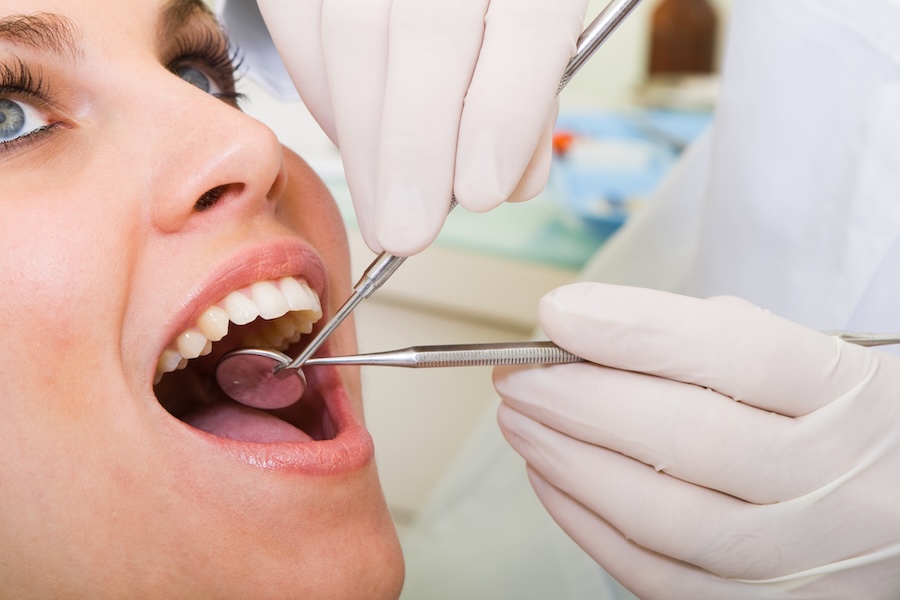
During an oral cancer screening, your dentist isn’t looking at your teeth—they’re focused on everything around them.
That includes your tongue, the inside of your cheeks, your gums, the roof of your mouth, and the floor beneath your tongue. Each of these areas is examined for changes in color, texture, or shape. Healthy tissue tends to look consistent, so anything that stands out—even slightly—gets a closer look.
This part of the exam is quiet and careful. It doesn’t involve any discomfort, but it is thorough. Your dentist is paying attention to details that are easy to overlook on your own.
Why It’s More Than Just a Visual Check
In addition to what can be seen, there’s also a physical component to the screening.
Your dentist may gently feel along your jawline, under your chin, and along your neck. This helps check for any unusual lumps, swelling, or firmness that wouldn’t be visible during the visual exam alone. These areas can sometimes reflect changes happening deeper beneath the surface.
While this might feel like a small part of the visit, it adds another layer to the screening and helps create a more complete picture of your oral health.
What Your Dentist Is Looking For
The goal of the screening isn’t to diagnose anything immediately—it’s to notice anything that doesn’t look typical.
That can include red or white patches, sores that haven’t healed, areas that appear thicker than the surrounding tissue, or spots that feel rough or firm. Sometimes the changes are subtle, and that’s exactly why regular screenings are so valuable.
Most findings are harmless or related to minor irritation. However, identifying them early allows your dentist to decide whether something should simply be monitored or looked at more closely.
Why You Might Not Notice Changes Yourself
One of the reasons oral cancer screenings are so important is that early signs often don’t cause pain.
A sore or patch inside your mouth can be easy to miss, especially if it’s in an area you don’t see often. Even when you do notice something, it’s common to assume it’s from something minor, like biting your cheek or irritation from food.
Because of that, changes can linger without drawing much attention. Having your dentist check these areas regularly helps catch anything that doesn’t resolve the way it should.
What Happens If Something Needs a Second Look
If your dentist notices an area that stands out, the next step is usually to give it a little time and then recheck it.
The mouth tends to heal quickly, so many spots improve on their own once irritation is removed. You may be asked to come back in a couple of weeks so the area can be compared and evaluated again.
If it hasn’t changed or still raises concern, further steps may be recommended. This could include documenting the area more closely or referring for a biopsy. While that can sound serious, it’s often done out of caution to make sure nothing important is missed.
Who Is at Risk for Oral Cancer
While oral cancer can affect anyone, certain factors can increase the risk over time.
Tobacco use—whether smoking or chewing—is one of the most significant contributors, especially when combined with regular alcohol use. Prolonged sun exposure can also increase the risk of cancer on the lips, particularly for people who spend a lot of time outdoors.
There are also other factors to consider, including HPV (human papillomavirus), which has been linked to certain types of oral cancer. Age can play a role as well, although it’s important to note that not every case follows a predictable pattern.
Because of that, screenings are recommended for all adults, not just those who consider themselves at higher risk. It’s a simple way to stay aware and catch changes early.
How This Fits Into Your Routine Dental Care
Oral cancer screenings are part of your regular dental visits, even though they don’t always stand out as a separate step.
Because they’re done consistently, your dentist becomes familiar with what’s normal for you. That makes it easier to notice even small changes over time. Instead of relying on a single visit, screenings build on each other, creating a clearer picture of your oral health.
It’s one of those things that works quietly in the background, but it plays an important role in long-term care.
Oral Cancer Screenings in Cullman, AL at Cullman Cosmetic & Family Dentistry
At Cullman Cosmetic & Family Dentistry in Cullman, AL, Dr. Jonathan Echols, Dr. James Porter II, Dr. Ashley Holladay, and Dr. Perron Tucker include oral cancer screenings as part of every routine visit, taking time to carefully check areas that might otherwise go unnoticed.
If you’ve noticed a sore that hasn’t healed or something that just doesn’t feel quite right, it’s worth having it looked at. Reaching out to schedule a visit is a simple way to get clarity and make sure everything is moving in the right direction.
Categorised in: Oral Cancer Screenings