How Diet Impacts Your Teeth and Gums
July 14, 2026 9:00 amMost people know that food affects their dental health, but the connection is not always as simple as avoiding candy. The way something is eaten or drunk can be just as important as what is in it. Timing, frequency, acidity, texture, and saliva all influence what happens in the mouth afterward.
For example, a Mountain Dew finished with lunch affects the teeth differently from one that is sipped through an entire afternoon. A bowl of fresh fruit can be a nutritious choice, while lemon water consumed all day may still expose enamel to repeated acid. Crackers do not taste especially sweet, yet their starches can remain in the grooves of back teeth and contribute to cavity risk.
These details are useful because they leave room for realistic choices. Protecting your smile does not require a perfect menu or a refrigerator stocked only with foods a dentist would approve of. It does help to notice which habits keep sugar, starch, or acid in contact with the teeth for long stretches.
At Cullman Cosmetic & Family Dentistry, Dr. Jonathan Echols, Dr. James Porter II, Dr. Ashley Holladay, and Dr. Perron Tucker can often see patterns in the mouth that connect with everyday eating and drinking habits. Recurrent decay, enamel wear near the front teeth, dry mouth, or gum irritation may each point to a different part of the routine.
How Food and Drinks Contribute to Cavities
Cavities develop when certain bacteria in the mouth use sugars and starches from food and drinks to produce acid. That acid pulls minerals from the enamel, which is the hard outer surface of the tooth.
Saliva helps repair some of this early mineral loss. It clears food particles, dilutes acids, and carries minerals back to the enamel. When the mouth has enough time between meals and snacks, this natural recovery process can do its work.
Frequent eating and sipping shorten those recovery periods. Each exposure to sugar or starch gives bacteria another opportunity to produce acid, so a tooth may spend much of the day moving in and out of an acidic environment.
The National Institute of Dental and Craniofacial Research explains that both sugars and starches can be used by bacteria to produce enamel-damaging acids. It also notes that frequent exposure to foods and drinks containing them can lead to continued mineral loss.
This helps explain why cavities sometimes appear in people who do not eat much candy. Sweet drinks, crackers, chips, cereal, bread, granola bars, and other common foods may all contribute when they are consumed often or remain on the teeth.
Full-Sugar Soda and Energy Drinks
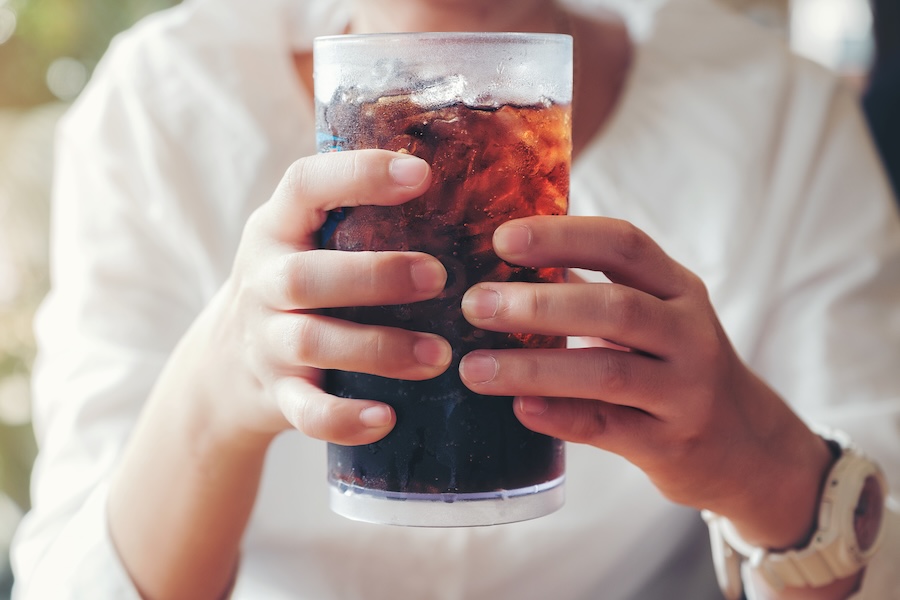
Regular sodas such as Mountain Dew, Dr. Pepper, Coca-Cola, and sweetened root beer contain both sugar and acid. The sugar supports acid production by bacteria, while the drink’s own acidity can soften enamel directly.
Energy drinks often create a similar combination. Many contain substantial added sugar, and even sugar-free versions may be acidic enough to contribute to enamel wear.
The occasional soda with a meal is different from carrying one through the workday and taking a sip every few minutes. With the second habit, the teeth repeatedly encounter sugar and acid before saliva has had much time to restore a more neutral environment.
The same concern applies to a large fountain drink that travels from the car to the desk and remains nearby until late afternoon. The serving size certainly counts, but the several hours of contact may be even more relevant.
For someone who enjoys soda or energy drinks, a few practical changes can reduce the exposure:
- Have the drink with a meal rather than between meals.
- Finish it within a reasonable period instead of stretching it across several hours.
- Avoid swishing it around the mouth.
- Follow it with water.
- Keep it away from bedtime, when saliva flow begins to slow.
These steps do not make the drink harmless, but they give the mouth more time to recover afterward.
Sports Drinks Are Often Used More Widely Than Needed
Sports drinks can be useful during prolonged, strenuous activity, especially when someone is losing a significant amount of fluid and electrolytes. However, they are often consumed during routine practices, short workouts, errands, school days, and other situations where water would usually provide adequate hydration.
Many sports drinks contain sugar and acid. During exercise, mouth breathing and dehydration may also reduce saliva, leaving less moisture available to clear the drink from the teeth.
A child or adult who takes small sips throughout a long practice may expose the teeth repeatedly. Then, if the same bottle stays in the car or gym bag for the ride home, the contact continues well after the activity ends.
Water is usually the best everyday drink. When a sports drink is genuinely useful, keeping it to the active period and returning to water afterward can reduce the length of the exposure.
Why Snacking Frequency Deserves Attention
A snack does not need to be especially large or sweet to influence cavity risk. How often the mouth receives food can be more important than people expect.
Imagine a day that includes breakfast, sweetened coffee on the commute, crackers midmorning, soda with lunch, a granola bar in the afternoon, and sweet tea on the drive home. Nothing on that list sounds unusual. However, the teeth have been exposed to sugar or starch at regular intervals for most of the day.
Someone who eats the same types of foods during three meals may give the mouth longer breaks in between. Saliva then has more time to clear residue and return minerals to the enamel.
This does not mean everyone needs to stop snacking. Children, athletes, people with certain medical needs, and anyone with a long gap between meals may need snacks. The choice and timing simply deserve some thought.
A snack with protein, fat, or fiber may also feel more satisfying than a handful of crackers alone. Cheese, nuts, eggs, vegetables with hummus, or fruit paired with yogurt may reduce the urge to keep reaching for another small bite every half hour.
Sticky Foods and Refined Starches
Some foods clear from the mouth relatively quickly. Others settle into the grooves of molars, between teeth, or around dental work and remain there.
Sticky candy, caramel, gummies, fruit snacks, dried fruit, and chewy granola bars are familiar examples. However, soft crackers, chips, pretzels, cereal, and white bread can also break down into a paste that clings to teeth.
This does not make a cracker equivalent to candy in every nutritional sense. From the bacteria’s perspective, though, both sugar and starch can provide material for acid production.
Texture and frequency often work together. A few crackers eaten with lunch, followed by water, are different from a bag kept open beside a computer for several hours.
Pairing starchier foods with a meal can be helpful because saliva flow is already higher while eating. Cheese, vegetables, meat, nuts, or another filling food may also make the meal more satisfying and reduce continued grazing.
Cavities and Acid Erosion Are Related but Different
Cavity formation involves bacteria producing acid from sugars and starches. Acid erosion occurs when acids from foods, drinks, or the body directly soften the enamel.
Both can weaken teeth, but the pattern and cause may differ. A patient with erosion may notice thinning edges, increased sensitivity, smooth worn areas, or changes in tooth shape even without a high number of cavities.
Common sources of dietary acid include:
- Regular and diet sodas
- Energy drinks
- Sports drinks
- Citrus juice
- Lemon water
- Sour candy
- Wine
- Kombucha
- Vinegar-based drinks
- Some flavored sparkling waters
- Powdered drink mixes containing citric acid
Several of these choices may fit into an otherwise nutritious diet. Fresh citrus provides vitamins and fiber, while kombucha or sparkling water may replace a sweeter beverage. Still, enamel responds to acidity rather than the health claims printed on the label.
The concern grows when an acidic item is consumed often, held in the mouth, or sipped over a long period. Lemon water with breakfast is not the same exposure as a large bottle that is refilled and sipped from morning until evening.
Healthy Foods Can Still Be Acidic
Fruit belongs in a balanced diet, and whole fruit is generally preferable to juice because it offers fiber and tends to be consumed more slowly as part of a snack or meal. Even so, citrus fruits, pineapple, berries, and other acidic foods can temporarily lower the pH in the mouth.
There is rarely a reason to avoid these foods entirely. It is more helpful to eat them with meals, avoid keeping acidic fruit in the mouth for long periods, and drink water afterward.
The same approach can help with vinegar-based foods, tomato sauces, kombucha, and similar choices. Frequency and contact time usually provide more useful guidance than labeling a food as either good or bad.
Some people also add lemon or apple cider vinegar to water and sip it throughout the day. Although the drink may contain little or no sugar, the repeated acidity can still affect enamel.
What to Do After Something Acidic
After an acidic meal or drink, rinsing with plain water can help clear residue and dilute the acid.
It is also wise to avoid brushing immediately afterward. The enamel surface may be temporarily softened, and brushing right away may add mechanical wear. Waiting a little while gives saliva time to neutralize the mouth.
Sugar-free gum can be useful when brushing is not practical, provided the patient can chew it comfortably. Chewing stimulates saliva, which helps buffer acid and return calcium and phosphate to the teeth.
There is no need for an elaborate routine every time someone drinks orange juice or eats tomato sauce. The most useful habits are usually simple: keep acidic drinks with meals, avoid prolonged sipping, rinse with water, and let saliva do its work.
Dry Mouth Can Raise Cavity Risk
Saliva plays a large role in protecting teeth, so food and drinks can have a stronger effect when the mouth is dry.
Dry mouth may be related to medications, dehydration, medical conditions, mouth breathing, tobacco use, cannabis use, or changes in saliva gland function. Patients may notice sticky saliva, frequent thirst, difficulty swallowing dry foods, or a mouth that feels especially dry at night.
When saliva is limited, food residue and acids may remain in the mouth longer. Cavities may begin appearing near the gumline, around older dental work, or in areas that previously stayed healthy.
Sweet drinks can become an easy habit because they temporarily relieve the dry feeling. Unfortunately, frequent sipping may create a second problem by exposing the teeth to sugar throughout the day.
Water is a better starting point. Depending on the cause, the dental team may also discuss sugar-free gum, saliva substitutes, prescription products, fluoride treatments, or changes to the preventive-care schedule.
Dry mouth is worth mentioning at a dental visit, even when it seems like a minor annoyance. It can change the way a diet affects the teeth.
Coffee, Sweet Tea, and Specialty Drinks
Plain coffee and unsweetened tea carry a different cavity risk from drinks loaded with sugar, syrup, sweet foam, or flavored creamer.
A large specialty coffee may contain enough added sugar to function more like a dessert. When it is sipped through the entire morning, the teeth receive repeated exposure rather than one brief period with breakfast.
Sweet tea can create a similar pattern, particularly when a large cup lasts through lunch and into the afternoon. Here in Alabama, sweet tea is not exactly a rare sight, so the point is not to pretend everyone will suddenly give it up.
A more workable approach may be to reduce the sweetness gradually, choose a smaller serving, drink it with a meal, or follow it with water. Finishing the drink rather than keeping it nearby for hours also gives the mouth a longer break.
Coffee, tea, and wine can stain teeth as well, although staining and decay are separate concerns. A beverage may darken enamel without causing a cavity, or contribute to erosion even when it contains no sugar.
Sugar-Free Drinks Still Need a Look at Acidity
Replacing a full-sugar soda with a sugar-free version removes much of the sugar that bacteria would otherwise use. That can lower cavity risk.
However, diet sodas, sugar-free energy drinks, flavored sparkling waters, and other zero-sugar beverages may still contain citric, phosphoric, or malic acid. Those acids can contribute to enamel erosion when exposure is frequent.
This is why the label “zero sugar” does not tell the entire dental story. It answers one question but not the acidity question.
Plain water remains the most tooth-friendly choice. For people who enjoy flavored or carbonated drinks, having them with meals and avoiding all-day sipping can make the habit easier on enamel.
Foods That Support Healthy Teeth
A diet that supports dental health can include plenty of familiar, satisfying foods.
Protein-rich foods such as eggs, fish, chicken, beans, lentils, nuts, and seeds help make meals and snacks more filling. Dairy foods such as cheese, milk, and lower-sugar yogurt provide calcium and protein without the same sugar exposure found in many sweet snacks.
Vegetables and whole fruits bring water, fiber, vitamins, and minerals. Apples, pears, cucumbers, carrots, leafy greens, broccoli, and bell peppers can all fit easily into meals and snacks.
Crunchy produce does not replace brushing, despite the occasional claim that an apple “cleans” teeth. Still, chewing fibrous foods stimulates saliva and may help move loose food through the mouth.
Cheese can be a useful addition to a snack or the end of a meal because it is filling, low in sugar, and less likely to stick around than a chewy bar or handful of crackers.
Water also deserves more credit than it usually receives. It hydrates, rinses away loose food, and does not bring added sugar or acid into the mouth.
Diet and Gum Health
Gum disease begins with plaque buildup and the body’s response to the bacteria around the teeth. Brushing, cleaning between teeth, and professional care remain essential.
Diet supports the health of the gum tissue in a broader way. Adequate protein, vitamin C, vitamin D, calcium, and other nutrients help the body maintain and repair tissues. A varied diet that includes vegetables, fruit, dairy foods, eggs, fish, beans, nuts, and lean proteins can contribute to that support.
However, food cannot remove plaque from beneath the gumline. A smoothie, vitamin, or anti-inflammatory eating plan may be beneficial in other ways, but it cannot take the place of cleaning around the teeth.
Frequent sugar exposure may also encourage plaque growth and increase cavity risk along the gumline. This can be particularly important for patients with recession because exposed root surfaces are softer than enamel and more vulnerable to decay.
Practical Changes That Do Not Require a Perfect Diet
Improving a diet for dental health does not require replacing every favorite food at once. A few repeated changes may do more good than a short-lived attempt to follow an ideal menu.
Consider starting with one or two of these:
- Replace the daily soda or energy drink with water on several days each week.
- Keep sweet drinks with meals instead of sipping them between meals.
- Finish coffee or sweet tea within a shorter period.
- Pair crackers or chips with lunch rather than grazing from the bag.
- Choose whole fruit more often than juice, gummies, or dried fruit.
- Add cheese, nuts, eggs, hummus, or another filling food to snacks.
- Rinse with water after acidic drinks.
- Use sugar-free gum after meals when brushing is not practical.
- Bring up dry mouth at the next dental visit.
- Check whether a “zero-sugar” drink still contains several acids.
A daily habit often has more influence than an occasional treat. Birthday cake once in a while is unlikely to shape cavity risk as much as a sweetened drink that appears beside the computer every afternoon.
Nutrition Counseling at Cullman Cosmetic & Family Dentistry
Food and drinks affect the mouth through sugar, starch, acidity, texture, frequency, and saliva flow. Looking at those factors together gives a much clearer picture than simply sorting foods into healthy and unhealthy categories.
At Cullman Cosmetic & Family Dentistry, Dr. Jonathan Echols, Dr. James Porter II, Dr. Ashley Holladay, and Dr. Perron Tucker can look at where decay, enamel wear, sensitivity, or gum inflammation is showing up and discuss habits that may be contributing.
Bring up the energy drink on the commute, the lemon water at the desk, the afternoon crackers, or the dry mouth that leads to frequent sipping. Those everyday details can help the team offer advice that fits the way you actually eat and drink.
Schedule a visit with Cullman Cosmetic & Family Dentistry in Cullman, AL, for practical guidance on protecting your teeth and gums while keeping meals enjoyable and realistic.
Categorised in: Nutrition, Oral Health