Do I Need a Bone Graft Before Getting a Dental Implant?
November 14, 2026 9:00 amWhen you start looking into an implant, learning that a bone graft may be needed can raise a new set of questions. You may wonder why the bone needs treatment, whether it means another surgery, and how much time it adds before the tooth is replaced. Some implant sites have enough bone already, while others need added support so the implant can sit in the planned position.
At Cullman Cosmetic & Family Dentistry in Cullman, Alabama, our team provides implant care and bone graft procedures. Dr. Jonathan Echols, Dr. James Porter II, Dr. Ashley Holladay, and Dr. Perron Tucker can assess the missing-tooth area and discuss the treatment it needs. We’ll explain any graft recommendation around your bone, health, and restoration plan rather than assuming every implant follows the same steps.
Bone Support for an Implant
An implant replaces the tooth root and needs enough bone to support it in the right position. That includes the width and height of the site, along with the bone surrounding nearby structures. The planned crown also affects where the implant should go, so the decision starts with both the bone and the tooth we are replacing.
Before recommending grafting, we check the gums and take the images needed to see the bone beneath them. A three-dimensional image may be needed to measure the area and look at nearby roots, nerves, or the sinus. We can then show you where more bone is needed and how that changes the implant plan.
Bone Changes After Tooth Loss
Once a tooth is removed, the bone around its socket begins to remodel. Over time, the ridge may become narrower or lose height, particularly if the space has been empty for years. Gum disease, injury, or infection can also leave less bone before the tooth is removed.
You may not notice those changes while wearing a bridge or simply leaving the space open. The gum surface can look healed even when the underlying ridge is too thin for the planned implant. We need to assess that support before giving you a reliable treatment sequence.
Bone Grafting During an Extraction
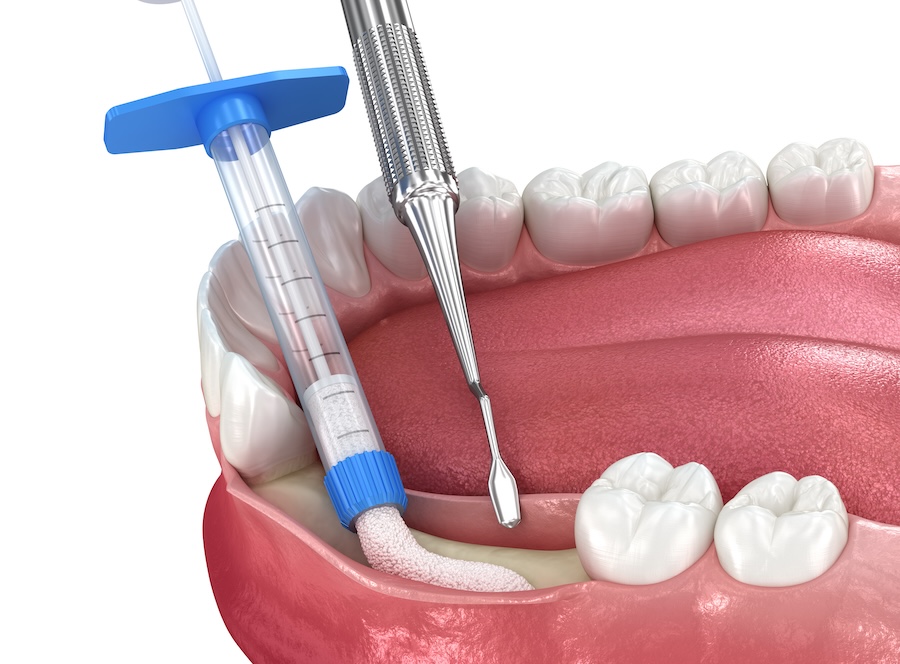
In some cases, graft material is placed in the socket when a tooth is removed to help preserve the ridge as it heals. The material acts as a framework while your body forms bone in the area. A membrane or stitches may also be used, depending on the procedure and the surrounding tissues.
This can reduce some of the ridge changes, although it does not guarantee that no additional grafting will be needed later. The extent of infection, condition of the socket walls, and implant plan affect the recommendation. If removal is being considered, ask about the grafting plan before the extraction visit.
Grafting Before Implant Placement
If the ridge has already narrowed or lost substantial volume, a separate grafting procedure may be needed. We then allow the area to heal before reassessing whether it can support an implant. The amount of grafting and healing time depend on the defect and how the tissues respond.
Sometimes we can add a smaller graft when the implant is placed, so a separate grafting visit is not needed. There still has to be enough existing bone to hold the implant steady while the area heals. We’ll explain which approach fits your mouth and why we may recommend allowing the bone to heal first.
Bone Grafting Near the Sinus
The sinus sits above the roots of the upper back teeth and can limit the available bone height after those teeth are lost. Some patients therefore need a sinus augmentation procedure to create room for supporting bone. The technique depends on the remaining bone and the amount of height needed.
If this applies to your implant, we’ll explain how it fits into the plan and whether placement happens at the same time or later. Any relevant sinus history should also be discussed during assessment. The procedure and expected recovery need their own explanation before you decide to proceed.
Recovery and Bone Healing
After grafting, you may have tenderness, swelling, or bruising during the early recovery period. We provide instructions about food, cleaning, activity, and any medicines needed for your procedure. If symptoms worsen instead of settling, contact the team so the area can be checked.
The grafted bone continues healing over a longer period, often several months, before the site is ready for the next stage. That does not mean you should expect months of soreness. Follow-up visits and imaging help us decide when healing has progressed enough to move forward.
Preparing for Your Procedure
Before surgery, go over your medicines and health history with us, including diabetes and tobacco use. These can affect healing and whether we need to make changes before planning the implant. If your gums also need treatment, we can explain how to take care of that before moving ahead.
If you are nervous about grafting, ask about the comfort options available at Cullman Cosmetic & Family Dentistry, including nitrous oxide for appropriate patients. We review your health, medicines, and planned procedure before recommending sedation and explaining any preparation or transportation requirements. We’ll also separate the graft, implant, and final restoration fees so you can review the whole treatment plan before beginning.
Implant and Bone Graft Consultations in Cullman
If you’re considering an implant, we can check the site and explain whether grafting is recommended. Our Cullman Cosmetic & Family Dentistry team will review the reason, timing, and expected recovery for each stage. Schedule a consultation in Cullman, Alabama, and come find out what replacing your missing tooth would involve for you!
Categorised in: Dental Implants